Key takeaways
- Three offices: Hazelwood (314) 627-1411, Tesson Ferry (314) 530-5480, O'Fallon (636) 280-0990. All close 12 to 2 daily.
- The first visit is a history, a physical exam, a diagnosis if findings support one, and a written plan you can repeat out loud.
- Bring the crash time, your own notes, any ER paperwork, your medications, and your insurance card. Ask the clinic directly how a visit is billed.
- Emergency symptoms skip the clinic. If the clinic sends you to the ER, that is the system working.
The logistics, stripped down. Three offices, three phone numbers, hours that fit around a workday, and a first visit that is an exam rather than a sales pitch. Everything on this page is what Missouri Injury Clinic publishes on its own site. Confirm hours on the call.
The call
Pick the office nearest you. Hazelwood in north county at (314) 627-1411. South County on Tesson Ferry at (314) 530-5480. O'Fallon on West Terra Lane at (636) 280-0990. Say it was an auto injury and when the crash happened. If the head was involved, say the head. If you went to an ER first, say that too. Ask for the next opening.
Hazelwood and South County run Monday through Thursday 9 to 6 and Friday 9 to 12. O'Fallon runs Monday, Tuesday, and Thursday 9 to 6, with Wednesday and Friday by appointment. Every office closes 12 to 2 daily, so a call at 12:30 goes to a closed office. Call at 9 or at 2.
The first visit
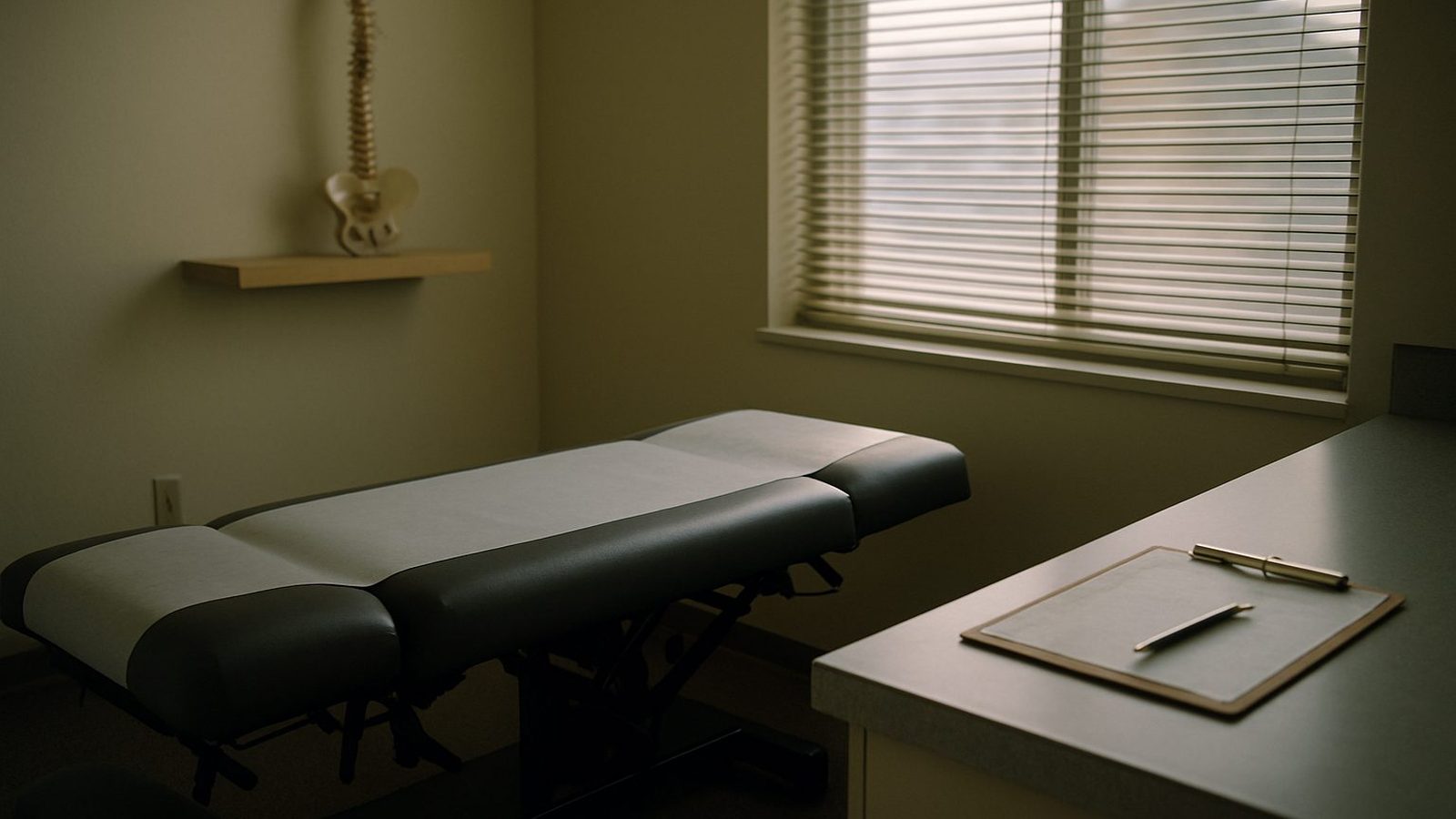
Expect an exam, not a pitch. The lane the clinic publishes for auto injuries is diagnosis and a treatment plan after a crash, and the first visit is where that starts. A history of the crash: direction of the hit, where you were looking, whether you were braced, whether your head touched anything, what has changed since. A physical exam of the neck, back, and whatever else the crash reached, with range of motion, tenderness, strength, reflexes, and the nerve tests that sort a strain from something that needs a different office. A diagnosis if the findings support one. A written plan you can repeat out loud.
Ask the questions plainly: what did you find, what is the plan, how long before we should expect a change, and what would make you send me somewhere else. A clinician who cannot answer that is not handing you a record worth keeping. Joseph L. Hollingsworth, DC, who runs the clinic, is a chiropractor. He is not a lawyer and he is not an emergency department, and the clinic's own line is putting the CARE back in healthcare.
What to bring
- When the crash happened, as close to the hour as you can get, and where.
- What you wrote down that night, if you wrote anything down. The lag page explains why.
- Where it hurts today, and how that has moved since the crash.
- ER or urgent care paperwork if you went anywhere first, including any imaging report.
- A list of medications you take, and any old back, neck, or head history.
- Your insurance card. Ask the clinic directly how a visit is billed and what they accept. This desk does not publish payment terms for a clinic it does not own.
- If you already have an attorney, bring their contact so records can be sent where they need to go. You do not need to have decided anything about a claim before you get examined.
What to say if you are not sure it is bad enough
Say exactly that. "I am not sure this is bad enough to come in." The person on the phone has heard it before, and the answer is almost always to come in and let the exam decide. A strain that gets looked at and turns out minor costs you an hour. A strain that gets waited out and turns out not minor costs you a record of what it looked like at the start. That record is a care document first.
The bright line
The clinic is built for planned care. Chest pain, a sudden severe headache, weakness or numbness on one side, trouble speaking, loss of bowel or bladder control, or a head injury with vomiting or worsening confusion is an emergency room trip right now, not a call to a clinic. If the clinic hears any of that on the phone and sends you to the ER instead of booking you, that is the system working, not a wasted call.
After the first visit
Dated visits after the first one are how the arc of recovery gets written down. Is the range coming back, is the sitting tolerance improving, is anything new appearing. Keep the appointments you are given, and keep the three-lines-a-night habit. If the plan is not working, say so. A plan that gets adjusted on the record is a plan that is doing its job.
Bulletin / Missouri Injury Clinic
Call at 9 or at 2. Never at 12:30.
Every Missouri Injury Clinic office closes 12 to 2 daily. Say it was an auto injury, say when, and ask for the next opening.