Key takeaways
- In a rear-end hit the lap belt fixes the pelvis while the torso keeps moving. The lumbar spine is the hinge and takes the shear.
- NINDS describes strains and sprains as the most common cause of acute low back pain. They swell and stiffen on a delay.
- Pain below the knee, numbness, tingling, or weakness in a foot changes the exam question. It is not a wait-and-see symptom.
- Loss of bowel or bladder control, saddle numbness, or progressive leg weakness is an emergency room trip right now.
The neck gets the word. The low back gets the load. In a rear-end collision the lap belt holds the pelvis to the seat while the spine above it keeps moving, and the place where held meets moving is the lumbar region. It takes the shear. Then it waits a day or two to tell you.
The mechanics, in plain terms
Picture the seat belt doing exactly what it is designed to do. The National Highway Traffic Safety Administration is unambiguous that belts save lives, and nothing on this page argues otherwise. But holding the pelvis in place means the lumbar spine becomes the hinge between a fixed base and a torso that is still going somewhere. Muscles along the spine contract hard to stop that motion. Ligaments that connect the vertebrae get stretched. Sometimes the small joints at the back of each vertebra get jammed. Occasionally a disc takes more than it should.
If you were twisted at the moment of impact, reaching for something in the passenger seat, looking over your shoulder, one hand on the wheel, the load goes through the spine asymmetrically. That is worth telling the clinician, because a rotated low back strain behaves differently from a straight-on one.
What delayed low back pain usually means
Most often it means a strain: muscle and ligament tissue that was overstretched and is now inflamed. The NINDS back pain page describes strains and sprains as the most common cause of acute low back pain. The pain tends to be across the low back, worse with getting up from a chair or out of bed, better with gentle movement, worse again after sitting through a shift. It can travel into the buttock. It usually does not travel below the knee.
When it does travel below the knee, or comes with numbness, tingling, or weakness in a foot, the exam has a different question to answer, because now a nerve root is in the conversation. That is still a clinic question in most cases. What it is not is a wait-and-see question.
The sitting problem
The cruelest part of a low back strain after a crash is that the two things a working adult does most, sitting and driving, are the two things it tolerates worst. A truck seat, a desk chair, a forklift, a long commute on 270: all of them compress a back that wants to move. People describe being fine in the morning, miserable by two, and stiff as a board by the drive home. That pattern is worth writing down day by day, because it is exactly the kind of thing a clinician uses to judge whether a plan is working.
What the exam does
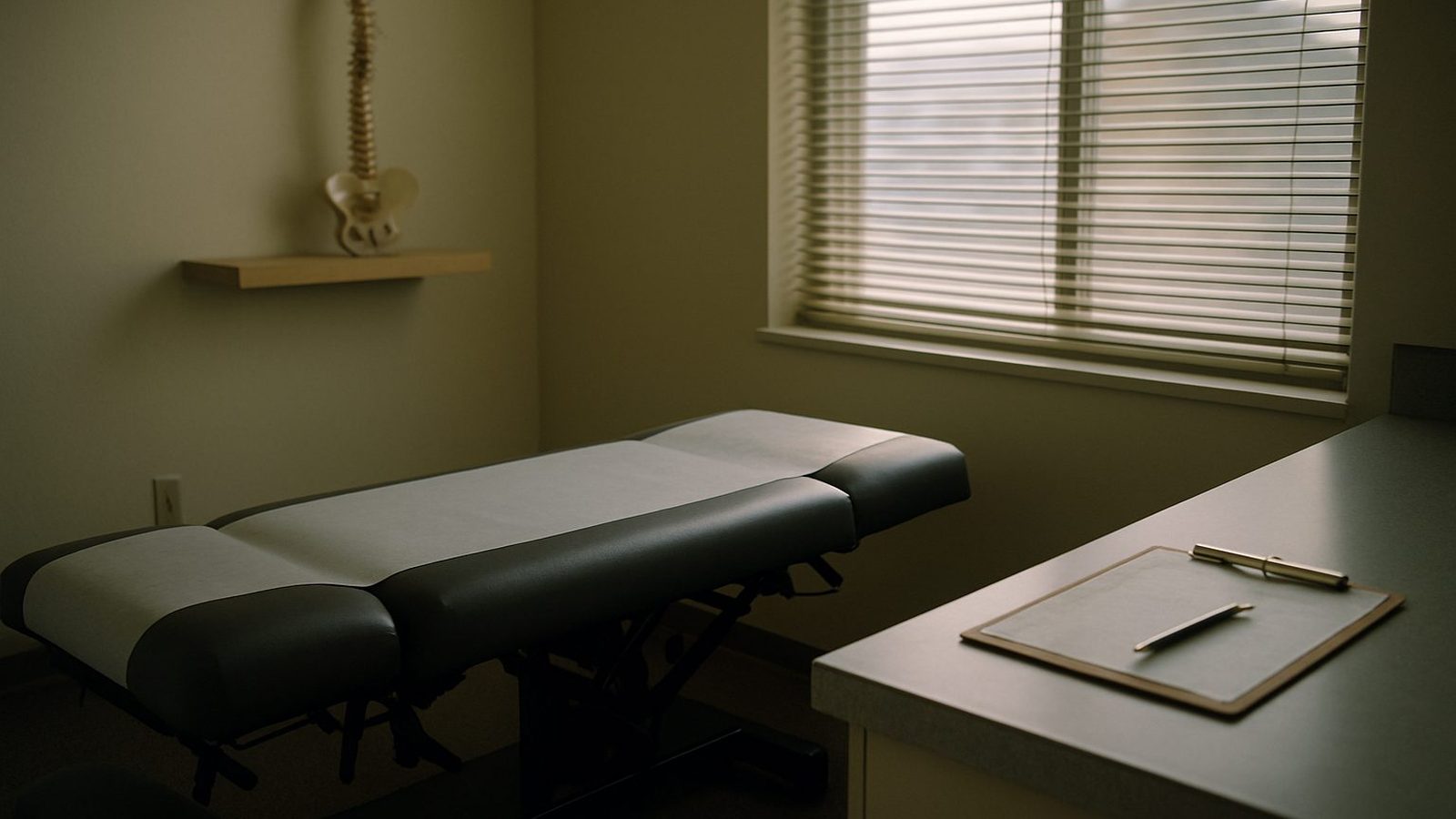
A low back exam after a crash is looking for the bucket. Range of motion forward, back, side to side, and which direction reproduces the pain. Tenderness along the spine and the muscles beside it. Leg raise tests that tell the clinician whether a nerve root is irritated. Strength, reflexes, and sensation in the legs and feet. A history of the crash and of the back before it, because a back with an old story behaves differently from a fresh one.
Out of that comes findings, written and dated, and a plan. For a straightforward strain that plan is usually movement rather than rest, specific exercises, manual care, and a schedule that checks whether the sitting tolerance is improving. For anything with a nerve question in it, the plan includes when imaging or a referral would be the next step. Ask that question directly. Here is how the first visit goes.
The bright line
Two low back symptoms after a crash do not wait for a clinic opening. Loss of bowel or bladder control, or numbness in the area you would sit on a saddle, is an emergency room trip right now. Progressive weakness in a leg, where it is worse today than yesterday, is the same. Those are rare and they are serious, and an injury clinic will send you on to the ER if it sees them. That is the system working.
The lane
Missouri Injury Clinic publishes auto injuries as a lane: diagnosis and a treatment plan after a crash. A low back that stiffened up two days after a rear-end hit is what that lane is for. Three offices, the nearest to this desk in Hazelwood, all closed 12 to 2 daily. Call, say it was a crash, say when, and say the back. Offices and hours are here.
Bulletin / Missouri Injury Clinic
The back that would not straighten this morning is the lane.
An exam this week, findings on paper, a plan you can read. Missouri Injury Clinic takes auto-injury patients at three metro offices.
Hazelwood: Mon to Thu 9am to 6pm, Fri 9am to 12pm. Closed daily 12 to 2. South County and O'Fallon numbers are on the offices page.